
Imagematrix

As an organization, you have established a number of core values, or you want to project a certain image. An image matrix can be used to gain insight into the extent to which you are able to convey this to your target group. An image matrix is therefore very similar to a priority matrix, but it serves a different purpose.

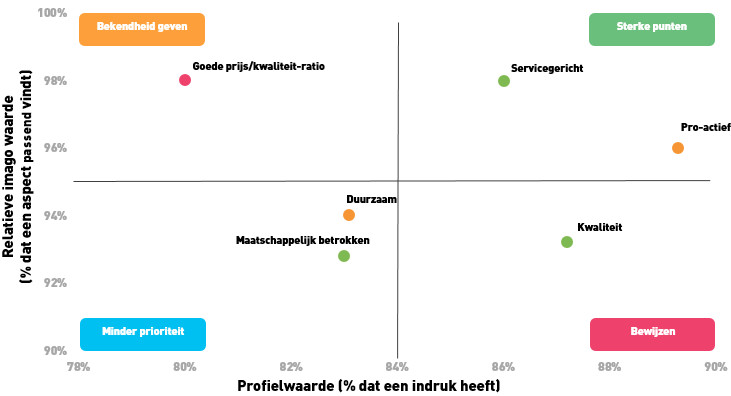
The values that are important to you as an organization, known as image aspects, are assessed on two axes: profile value and relative image value. The profile value represents the percentage of your target group that has an impression of the image aspect in question. The relative image value reflects the percentage of this group that finds the image aspect appropriate. In this way, your image aspects can be divided into four quadrants, providing insight into which image aspects are your strengths, or which need to be proven or have less priority. These are the four quadrants:

low graph

Lower priority: low relative image value combined with a low profile value.

up and down

Retention: high relative image value combined with a low profile value.

up-down-1

Approach: low relative profile value combined with a high profile value.

high-graph

Utilize: high relative image value combined with high profile value.

Imagematrix

The image below shows what an image matrix might ultimately look like: 
imagomatrixmarkteffect

Imageradar

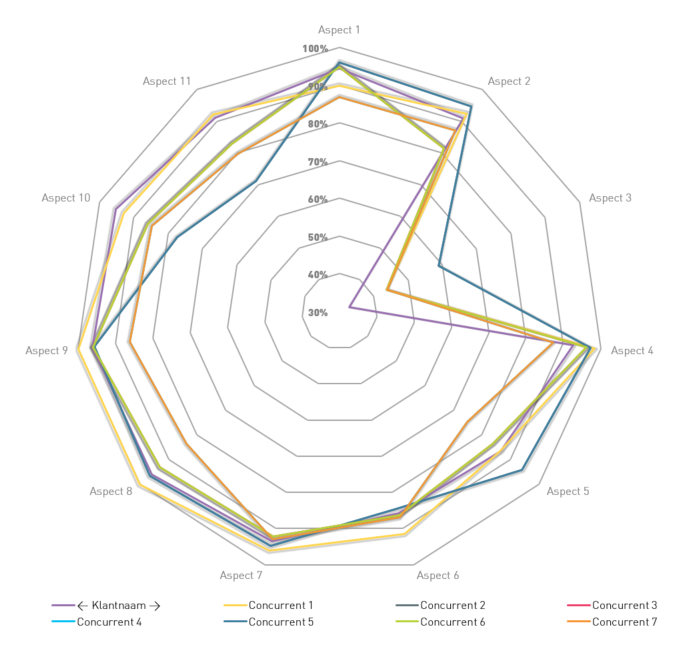
In addition to an image matrix, an image radar can provide insight into how your results compare to the most important players in the market. With the help of this image radar, you can identify the image aspects in which you have an edge over the competition, which can lead to valuable insights. Below is an example of an image radar:
Markteffect Radar