
 info@markteffect.nl
  Back to the website

Commitment and loyalty in the workplace: what do Dutch workers say?

Although there was no actual recession in the Netherlands, many Dutch people felt as if there was one due to all the price increases. In the previous survey in November 2022, 88% expected a recession to occur. Almost half of the Dutch population expected the recession to last more than twelve months. However, despite all the price increases, the economy grew by 0.6% in Q4 2022. So there was no recession, even though many Dutch people experienced it as such.
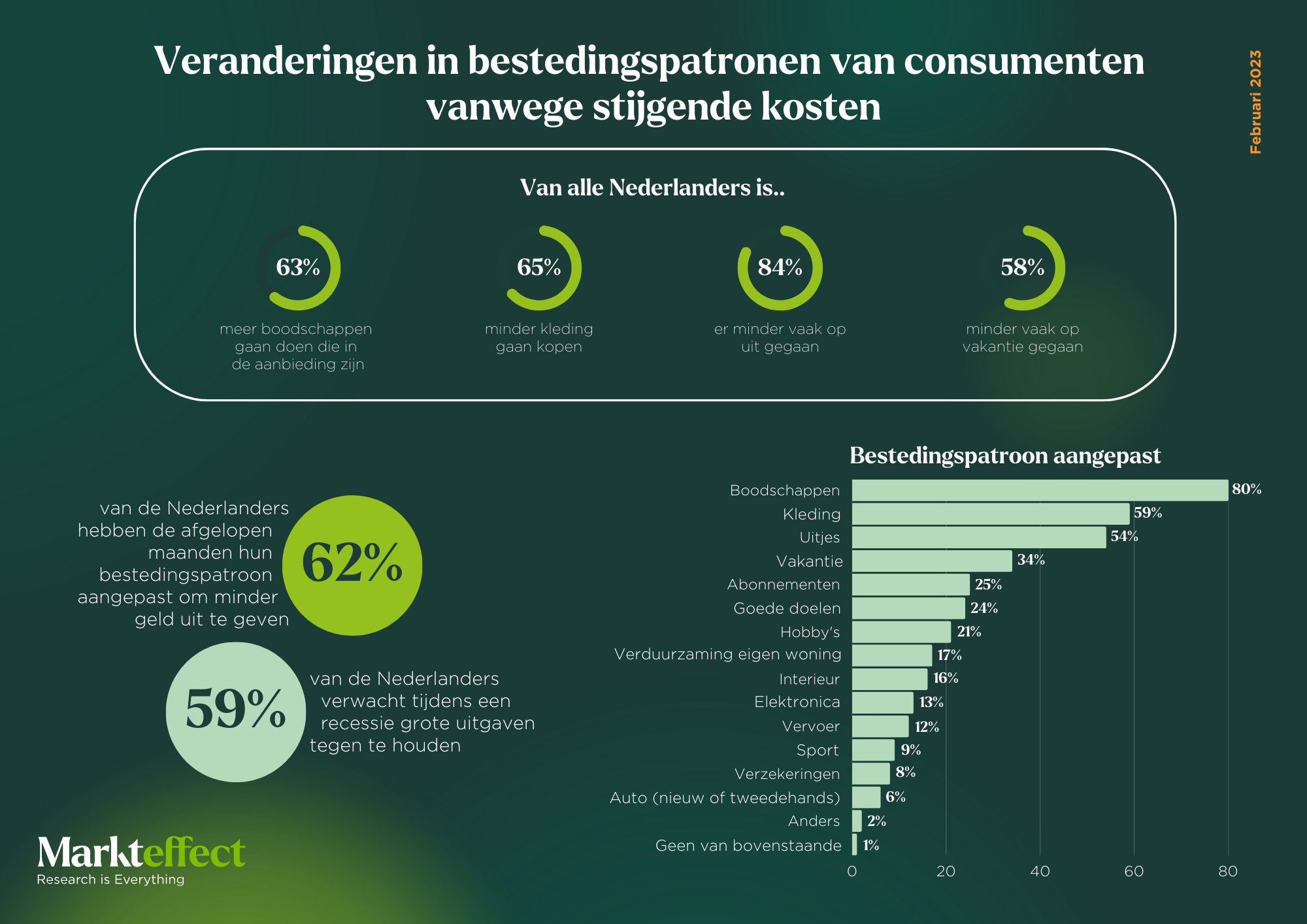
One consequence of the perceived recession is that spending patterns and expected expenditure patterns are changing. Research shows that more than three in five Dutch people (62%) have adjusted their spending patterns in recent months in order to spend less money. 11% of Dutch people have not (yet) done so and 26% remain neutral on this issue. Of the Dutch people who have adjusted their spending patterns, 80% indicate that they have changed their spending patterns in the area of groceries.
The biggest savings were made on groceries, clothing, and outings. Savings on sports and insurance were less common. Dutch people with low incomes adjusted their spending patterns on groceries the most (93%). They only bought the bare essentials, switched from premium brands to store brands, or even switched supermarkets to spend less money on groceries. Due to the recession, people have even started buying unhealthy products, because in many cases they are cheaper. Special attention is paid to special offers and discount vouchers.
Approximately three in five Dutch people who have adjusted their spending patterns in the area of vacations have done so by going on vacation less often. In addition, more people have chosen to stay closer to home, go on luxury vacations less often, or even decide not to go on vacation at all.
What we are seeing is that people are making more conscious choices. They are looking for discounts more often, are more likely to bring their own food and drinks, and at the same time are looking for something that will fill their day. It seems that the choice of an outing is related to these aspects.
Research shows that the average Dutch person looks for discounts when planning an outing. We have also seen an increase in the use of promotions over the past year. As the Dutch Open Air Museum, we believe it is important that culture is and remains accessible to a broad target group. That is why, from the start of the high season at the end of March, we will be working with variable rates. We will be reducing admission prices on weekdays. We also have various promotions with municipalities whereby people on low incomes receive discounts on culture, among other things.
Carola van der Woude, Head of Marketing & Communications at the Dutch Open Air Museum
With the perceived recession, Dutch people are more cautious about making large purchases. Three in five Dutch people (59%) would hold off on large purchases during a recession. Purchases such as a new sofa, car, or vacation are being considered more carefully or postponed. As in the September and November 2022 surveys, vacations are the biggest expense that people are holding back on. Dutch people expect to go on vacation less often (52%), and if they do book a vacation, it will be less luxurious than before.
Looking ahead, there are many similarities with recent months. The main categories for saving and postponing major expenditures remain groceries, clothing, vacations, and outings. How and whether the recession will progress will become clear over the coming months.
The survey was conducted by independent research agency Markteffect February 2023 among a representative sample of Dutch respondents aged 18 and older.
Interested in reading the entire report? Download the full reporthere!
Want to know more? Here are some relevant news articles. That way, you won't miss out on anything happening in your industry.
Back to overview
.jpg)